Pilgrimage
Umrah Packages Karachi: Sahi Package Kaise Choose Karein?
Nov 9, 202617 min read
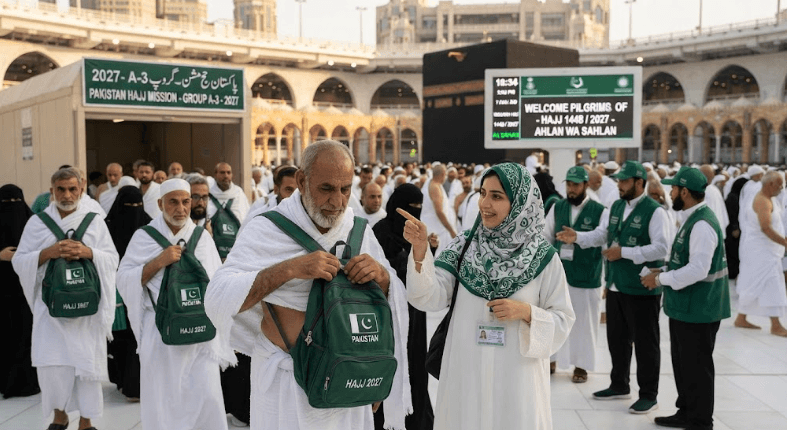
Hajj 2027 from Pakistan: government vs private scheme, costs, registration steps and the 20 November 2026 private package deadline.
Every year, hundreds of thousands of Pakistani Muslims hope to be among the pilgrims who travel to Makkah, Madinah, Mina and Arafat under Pakistan’s Hajj quota. For Hajj 2027, the process looks very different from previous years. There is a new four-year Hajj policy, a fully digital application system, an official Pak Hajj App, a strict rule against paying private operators directly, and deadlines that are either very close or have already passed.
If you are asking “Can I still go for Hajj in 2027?”, “Which scheme is better for me?” or “What happens if I missed the deadline?”, this guide is for you. We have put the registration process, the difference between the government and private schemes, the costs and every key date in one place, in plain English.
A quick note before we begin: Hajj rules and dates are set by the Ministry of Religious Affairs and Interfaith Harmony (MoRA) and can change at short notice. This guide reflects official announcements and news reports available up to 12 November 2026. Always confirm the latest position on the official Hajj portal (hajj.mora.gov.pk) or the Pak Hajj App before you pay anything.
Detail | What we know |
|---|---|
Total Pakistani quota | 179,210 pilgrims |
Government scheme seats | 107,526 (77,526 long package and 30,000 short package) |
Private scheme seats | 71,684 |
Government package cost | Rs1.2 million (long, about 38 to 42 days) and Rs1.3 million (short, about 20 to 25 days) |
Private package cost | Roughly Rs1.4 million to Rs3.75 million across 16 basic packages |
Where to apply and pay | Pak Hajj App and the official Hajj portal only |
Government scheme status | All seats reserved; second instalment window closed on 20 October 2026 |
Private scheme deadline | 20 November 2026 to select and pay for a package, or until seats run out |
Passport validity needed | At least until 16 November 2027 |
Expected Hajj dates | Around mid-May 2027, depending on moon sighting |
The most important line in this table is the last-but-three one. If you still want to perform Hajj in 2027, the private scheme is the only route left, and the window is closing.
For years, Pakistan announced a fresh Hajj policy every single year. That meant new rules, new costs and new application windows each time, and many intending pilgrims only found out the details a few weeks before applications opened.
In July 2026, the federal cabinet approved Pakistan’s first multi-year Hajj Policy and Plan, covering 2027 to 2030. The goal is stability, transparency and long-term planning. Here are the changes that matter most to an ordinary applicant.
1. Register once, choose your year. Under the new system, intending pilgrims can register for any Hajj season up to 2030 and select a preferred year, instead of re-registering every year. The policy links this to a deposit of about 10% of the estimated Hajj cost to secure priority on a first-come, first-served basis.
2. A 60:40 quota split. From 2027 to 2030, 60% of Pakistan’s quota goes to the government scheme and 40% to private operators, unless the federal cabinet decides otherwise. In Hajj 2026 the split was 119,210 government seats against 60,000 private seats, so private operators now have a bigger share.
3. Everything is digital. Registration, applications, payments, complaints and post-Hajj feedback are all handled through the NITB-built Hajj portal and the Pak Hajj App. Paper-based cash transactions have been discontinued, and payments flow through government-designated banking channels.
4. Tighter control of private operators. Private Hajj companies are registered and monitored by the ministry. Only 25 authorised operators are offering packages for 2027, and quota trading or sub-letting is prohibited.
5. A Hajj Savings Scheme. The government has announced a Shariah-compliant savings scheme that lets people save in monthly deposits while holding a slot for a future Hajj year. At the time of writing, check the ministry’s channels for its launch status.
For a first-time applicant, the practical message is simple: the old habit of walking into a travel office, handing over cash and “booking a seat” no longer works, and in the private scheme it can leave you with no protection at all.
Saudi Arabia allocates every country a Hajj quota, and Pakistan’s quota for 2027 is 179,210 pilgrims. This is the same total as recent years. What changes is how Pakistan divides it.
The government scheme received 107,526 seats. Of these, 77,526 are for the long package and 30,000 are for the shorter package. The private scheme received the remaining 71,684 seats, which are distributed among the 25 authorised Hajj Group Organisers.
The ministry had expected around 400,000 people to register for Hajj 2027. That means demand is more than double the number of available seats, which is exactly why the government scheme filled up so quickly and why the private scheme has been moving fast too.
Some reports quote 71,696 for the private quota. The ministry’s own notice uses 71,684, which is the figure we use here.
The process for Hajj 2027 had several stages. Understanding them helps you see where you stand today, and it will help you plan for future years under the four-year policy.
Pre-registration opened on 22 June 2026 and was mandatory for anyone who wanted to be considered for the government scheme in 2027. Applicants registered through the Hajj portal or the Pak Hajj App using their CNIC and passport details. Pre-registration closed in early August. Reports said more than 380,000 people had completed it by the time applications opened.
If you did not pre-register, you were not eligible for the 2027 government scheme. You remain in the rolling pool for 2028 to 2030.
Applications under both the government and private schemes opened in mid-August 2026 (the ministry’s notices cite 17 and 18 August) on a first-come, first-served basis. Pre-registered applicants logged in, chose between the government scheme (long or short package) and the private scheme, and paid the first instalment of 50% of the package cost.
Your passport had to be valid until 16 November 2027. Overseas Pakistanis could apply with a Pakistani passport, and the Saudi government has permitted Pakistan Origin Card (POC) holders to travel from Pakistan for Hajj, provided they travel on a Pakistani passport with eligible close family members.
Government-scheme applicants chose between the long and short packages. Private-scheme applicants browsed the packages uploaded by the 25 authorised operators in the Pak Hajj App, compared prices, hotel categories and duration, and chose one.
Before paying the second instalment, government-scheme pilgrims had to print the medical fitness form from the portal, have it verified by a doctor, and upload the signed document. This was mandatory.
The second instalment for the government scheme was collected from 5 to 20 October 2026. Pilgrims could pay by 1LINK, bank card or a manual bank challan. Anyone who missed the 20 October deadline had their application cancelled, with the amount already paid refunded to their account.
After payment, successful pilgrims complete the remaining steps: confirming personal details, receiving flight and accommodation information, attending Hajj training sessions, completing vaccinations and collecting their Hajj documents. Hajj flights from Pakistan normally operate in the weeks before Hajj, so travel is expected in roughly April to May 2027.
The government scheme is run directly by the Ministry of Religious Affairs. It is the traditional route for most Pakistani pilgrims and is designed to be affordable and uniform.
Cost. The long package costs about Rs1.2 million and lasts roughly 38 to 42 days. The short package costs about Rs1.3 million and lasts roughly 20 to 25 days. The short package costs more because the quota for it is smaller and the logistics are tighter.
Payment. Payment was split into two instalments of 50% each: the first at the time of application, the second in October.
Accommodation and services. Under the government scheme, accommodation, transport and Hajj services are arranged by the government. Standards are consistent but basic compared with premium private packages. Pilgrims are usually allotted groups and housing by the ministry rather than choosing their own hotel.
Pros. Lower cost, official oversight at every stage, a single transparent price and the comfort of a government-managed journey.
Cons. Limited choice, longer stays in the long package, fixed departure arrangements and, this year, extremely limited availability. All 107,526 government seats were reserved by late September, so the scheme is closed to new applicants for 2027.
The private scheme is run by Hajj Group Organisers (HGOs) who are authorised and monitored by the ministry. For 2027, there are 25 such companies. They offer packages with different durations, hotel categories and facilities.
Cost. The ministry has finalised 16 basic private packages, priced from roughly Rs1.4 million to Rs3.75 million. The cost of the sacrificial animal, Rs55,000 per pilgrim, is already included in all listed private packages.
Package variety. The private scheme offers economy, standard and premium options, shorter Hajj stays, direct flights from outside Pakistan and five-star hotel options. This flexibility is the main reason many families, senior citizens and overseas Pakistanis prefer it.
The big new rule. For the first time, booking, package selection and payments for the private scheme must be made through the Pak Hajj App or the official Hajj portal. Paying an operator or agent directly is not acceptable, and the ministry has stated it will not be responsible for losses from payments made outside the official system.
Pros. More choice, higher comfort levels, shorter durations and a package that fits your budget and needs.
Cons. Higher cost, quality that varies between operators, and a need to compare packages carefully rather than assume the price reflects the service.
Current availability. The private scheme started with 71,684 seats. By 16 September, 11,600 pilgrims had booked, with 60,000 seats still available. By 27 October, the ministry reported that about 80% of seats were booked, with around 15,000 left. The ministry has also said it can reallocate unfilled private quota after the 20 November deadline. In plain words: if you want a private seat, do not wait.
Factor | Government Scheme | Private Scheme |
|---|---|---|
Seats for 2027 | 107,526 | 71,684 |
Cost | Rs1.2m (long) / Rs1.3m (short) | About Rs1.4m to Rs3.75m |
Duration | About 38 to 42 days (long), 20 to 25 days (short) | Varies; shorter stays available |
Payment | Two instalments of 50% via portal/app | Through the Pak Hajj App/portal as per the package |
Choice of hotel and services | Fixed by the government | Chosen by you from 25 operators |
Who runs it | Ministry of Religious Affairs | Authorised Hajj Group Organisers under ministry oversight |
Current status | Fully booked | Open until 20 November 2026 or until seats run out |
Best for | Budget-conscious pilgrims | Those wanting comfort, flexibility or shorter stays |
There is no single right answer, but these questions help.
What is your budget? If you can afford only the government price, then for 2027 you will need to register for a future year, because that scheme is full. If your budget stretches to Rs1.4 million or more, the private scheme gives you real options.
How much time can you spend away? A 40-day stay is demanding for working professionals and for older pilgrims. Shorter private packages can mean less time away from family and work.
How much comfort do you need? Elderly pilgrims, people with health conditions and families with children often benefit from better accommodation closer to the Haram and a smaller group size.
Are you travelling from abroad? Overseas Pakistanis often prefer private packages because they may include direct flights from outside Pakistan.
Whichever scheme you choose, the spiritual core of Hajj is identical. The rites at Arafat, Muzdalifah and Mina are the same for everyone.
Date | Event |
|---|---|
22 June 2026 | Pre-registration opens |
Early August 2026 | Pre-registration window closes |
Mid-August 2026 (17 to 18 August) | Applications and first 50% instalment open for both schemes |
Late September 2026 | Government scheme quota fully reserved |
5 to 20 October 2026 | Second instalment window for the government scheme |
20 October 2026 | Government scheme second-instalment deadline; non-payers cancelled and refunded |
20 November 2026 | Deadline to select and pay for a private package; unfilled private quota may be reallocated |
April to May 2027 (expected) | Hajj flights from Pakistan begin |
Around mid-May 2027 | Hajj days, subject to moon sighting |
16 November 2027 | Minimum passport validity date for applicants |
The date that matters most today is 20 November 2026. As this guide is published, that is about a week away.
The ministry’s terms for Hajj 2027 included the following requirements.
You must hold a Pakistani passport valid until at least 16 November 2027.
You must have completed the required registration on the Pak Hajj App or Hajj portal.
Government-scheme applicants must have completed pre-registration.
You must be medically fit, and government-scheme pilgrims must submit a doctor-verified medical certificate.
Hajj is generally a once-in-a-lifetime obligation for those who are physically and financially able, and Pakistan has traditionally given priority to those who have not performed Hajj before. Check the current policy for any rules on repeat pilgrims.
Women travelling should check the latest guidance on mahram and group-travel requirements, as the rules have been revised in recent years and may differ between schemes.
Original CNIC or NICOP
Passport (with validity as above)
Passport-size photographs
Medical fitness certificate and vaccination records
Proof of payment (PSID or receipt from the portal or app)
Contact details for a family member who will remain in Pakistan
Every Hajj season, fraudulent agents take money from honest families. Under the new system, the safest rule is also the simplest: pay only through the Pak Hajj App or the official Hajj portal. Here are the warning signs.
An agent asks you to pay cash or transfer money to a personal account. Under the private scheme, this is no longer acceptable. The ministry has said it will not be responsible for any loss.
A guaranteed seat after the quota is full. If someone promises a government seat now, it is almost certainly false. The government quota has been fully booked.
A company not on the authorised list. Only 25 Hajj Group Organisers are registered for the private scheme in 2027. Verify any company’s name in the app before discussing a booking.
Prices far below the official range. Packages significantly cheaper than the lowest published private package deserve suspicion.
Pressure to decide immediately. Genuine scarcity exists, but a real operator will let you read the package on the official portal.
No written details. Every package should clearly state the duration, hotel category, flights, meals and transport.
If you see something suspicious, report it to the ministry through its official channels and complaint system. A legitimate adviser will happily tell you to check everything in the app.
Don’t be discouraged. Many people reading this have just learned the government window is closed, and that is a real disappointment. But you have options.
Option 1: Book a private package before 20 November. If your budget allows, this is the only way to perform Hajj in 2027. Open the Pak Hajj App, compare the packages offered by authorised operators, and complete the payment as soon as you have decided. Remember that bookings close at the deadline or when seats run out, whichever comes first.
Option 2: Register for 2028 to 2030. The four-year policy keeps registration open for future years. If you missed pre-registration or the 2027 government scheme, you stay in the rolling pool for the coming seasons. Check the Pak Hajj App for the latest registration and deposit rules.
Option 3: Join the Hajj Savings Scheme when it launches. If your plan is a Hajj a few years from now, a monthly savings plan with a reserved slot can make the cost far more manageable.
Option 4: Perform Umrah in the meantime. Umrah is not a substitute for Hajj, but many families use it as a spiritual and practical rehearsal. You get used to travelling in Saudi Arabia, to long walks and to crowds, and you keep the intention alive. If you are planning that, read our guide to Umrah packages from Karachi or browse our Umrah pilgrimage page.
Whether you are booked for 2027 or planning for a later year, early preparation makes the journey smoother.
Health and fitness. Hajj involves a great deal of walking in heat and crowds. Start a gentle daily walking routine, manage chronic conditions with your doctor and ask about required vaccinations early.
Knowledge. Learn the rites: ihram, tawaf, sa’i, the day of Arafat, Muzdalifah, Mina, the stoning of the Jamarat, sacrifice and the farewell tawaf. Attend the official training sessions and, if you can, a local Hajj seminar.
Finances. Budget beyond the package cost. Personal shopping, gifts, additional food, communication and emergency funds are usually extra.
Documents. Renew your passport now if it expires before 16 November 2027, and keep scanned copies of every document.
Family arrangements. Plan work leave, childcare and care for elderly relatives well in advance, especially if you are going for 40 days.
At Saffar Guru, we are a Karachi-based travel company that helps people with pilgrimage planning, Umrah packages, hotel reservations in Makkah and Madinah, visa services and airline tickets. Hajj bookings in Pakistan must be made only through the official Pak Hajj App and portal, so we will never ask you to send Hajj money to a personal account.
What we can do is help you understand the process, plan your wider journey, and prepare for Umrah or future Hajj seasons. You can explore our Hajj page, our hotel reservation services and our visa services, or message us on WhatsApp at +92 335 2857444 for guidance.
When is Hajj 2027? Hajj is expected to fall around mid-May 2027. The exact dates depend on the sighting of the Dhul Hijjah moon in Saudi Arabia.
Can I still apply for the Hajj 2027 government scheme? No. All 107,526 government seats were reserved, and the second instalment deadline of 20 October 2026 has passed. Unpaid applications were cancelled and refunded.
What is the last date for the private Hajj scheme? 20 November 2026 is the last date to select and pay for a private package. Bookings may close earlier if seats run out.
How much does Hajj 2027 cost from Pakistan? The government packages cost Rs1.2 million (long) and Rs1.3 million (short). Private packages range from about Rs1.4 million to Rs3.75 million.
Can I pay a private Hajj operator directly? No. Selection and payment must be made through the Pak Hajj App or the official Hajj portal. The ministry will not take responsibility for payments made directly to a company or agent.
How many private Hajj companies are authorised? 25 companies are registered and authorised for the private scheme in 2027.
Do I need to register every year? No. Under the 2027 to 2030 policy, registration is designed to cover multiple years, and you can select your preferred Hajj year.
Is the sacrifice (Qurbani) included? In the private scheme, the Rs55,000 animal sacrifice cost is included in all listed packages. Check your package details to confirm.
Can overseas Pakistanis perform Hajj through Pakistan’s quota? Yes, if they hold a Pakistani passport and meet the registration requirements. POC holders may also travel from Pakistan with a Pakistani passport and eligible close family members.
What happens if I miss the deadline? In the government scheme, missing a payment deadline led to cancellation and a refund. In the private scheme, unbooked quota may be reallocated after 20 November.
Hajj 2027 from Pakistan comes down to three facts. The government scheme is full, the private scheme closes on 20 November 2026 or when its seats run out, and every payment must go through the Pak Hajj App or the official Hajj portal.
If your budget and health allow, compare the private packages in the app this week. Choose on duration, hotel distance, flights and what is included, not on price alone. If 2027 is not possible for you, you have not lost your chance. The four-year policy keeps registration open through 2030, so you can pick a year, start saving and prepare with time on your side.
Whatever you decide, use the waiting period well. Keep your passport valid, look after your health, learn the rites of Hajj and stay away from anyone who asks for cash outside the official system.
Hajj is a journey of the heart before it is a journey of travel. May Allah accept your intention, make the way easy for you, and invite you to His House at the right time.
Planning Umrah, hotels in Makkah and Madinah, or visa support while you wait? Message the SaffarGuru team on WhatsApp at +92 335 2857444, or explore our Hajj and Umrah pages.
Sources and further reading: Ministry of Religious Affairs announcements as reported by Arab News Pakistan, Radio Pakistan, The Express Tribune, The News, Business Recorder, Daily Times, ProPakistani and Pakistan Observer, between June and October 2026. Figures and dates may change, so verify them on hajj.mora.gov.pk or the Pak Hajj App.
Get the latest travel stories, guides and tips straight to your inbox.