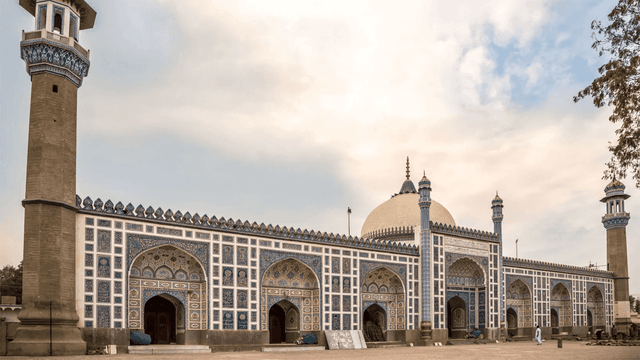
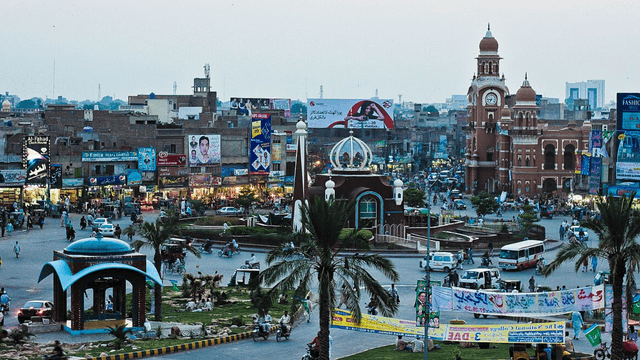
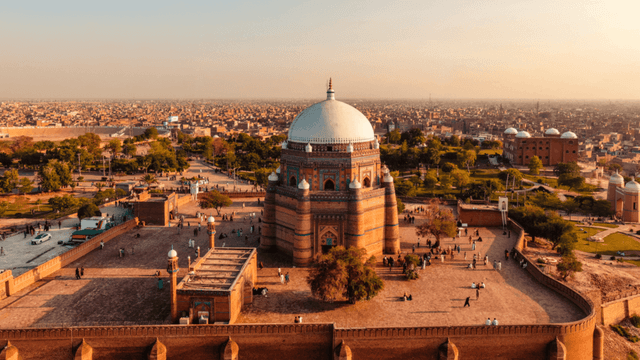
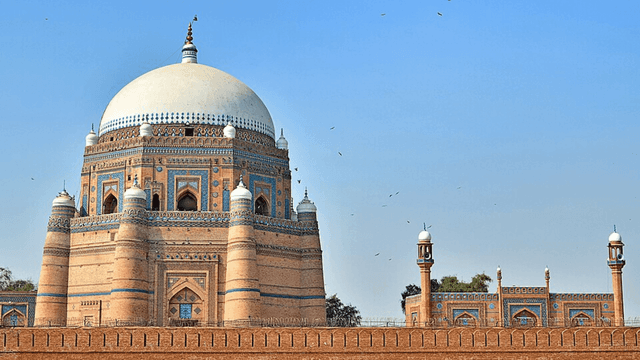
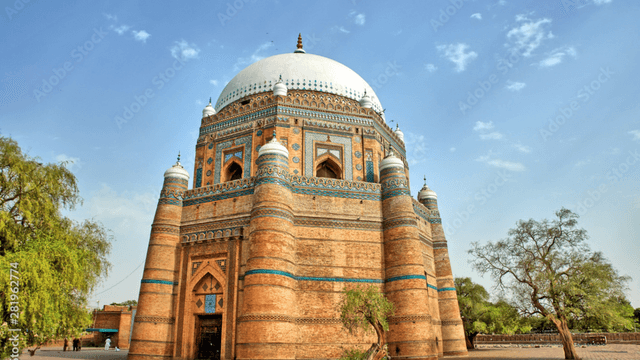
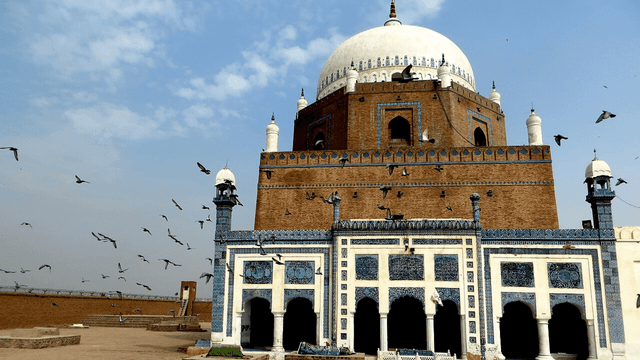
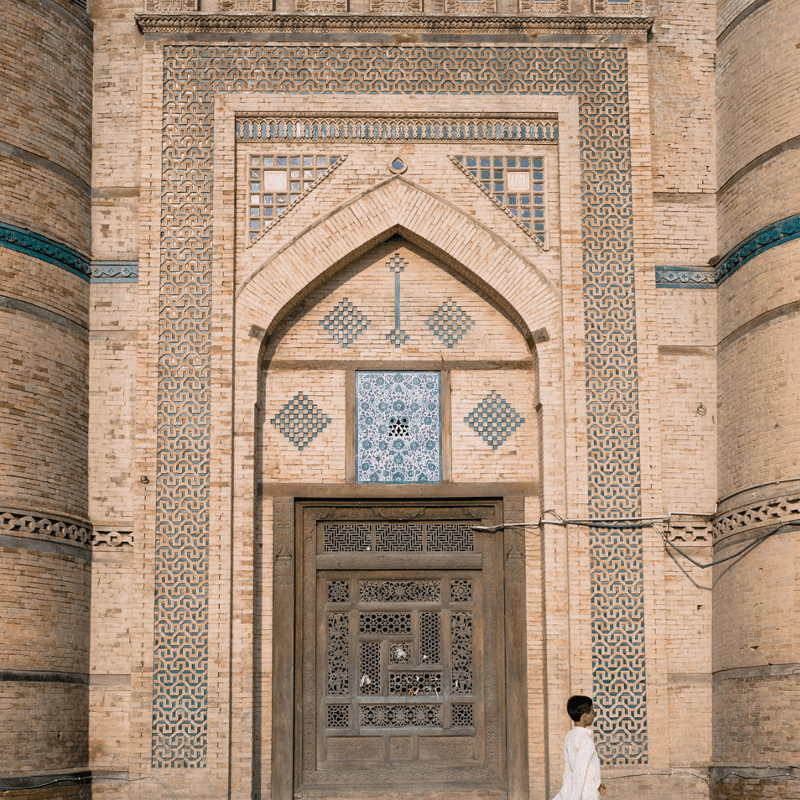
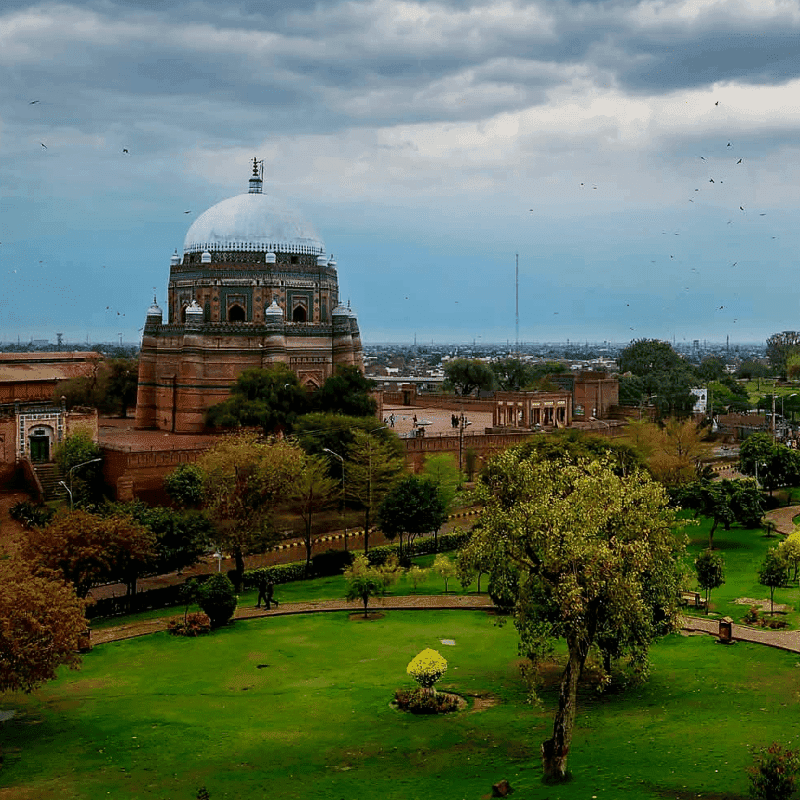
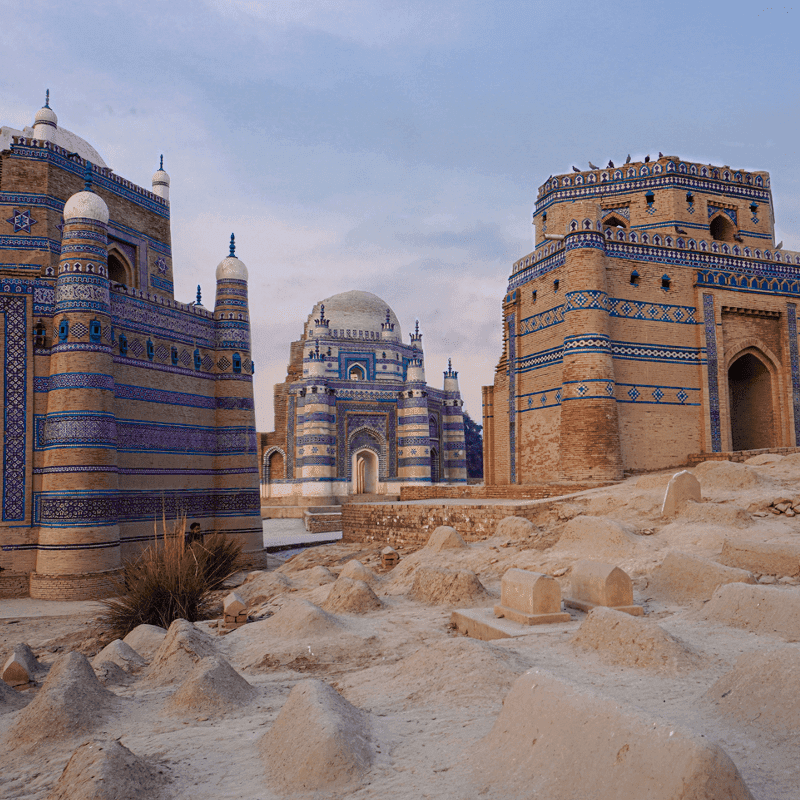
At the heart of the old city stands the Shrine of Hazrat Shah Rukn-e-Alam, an octagonal 14th-century masterpiece wrapped in deep blue and turquoise kashi tilework, widely regarded as one of the finest examples of Islamic funerary architecture in the subcontinent. Nearby, the Shrine of Bahauddin Zakariya and the riverside Shrine of Shah Shams Tabrez draw pilgrims from across the country, while the old Multan Fort area and Ghanta Ghar (Clock Tower) anchor the winding lanes of the walled city.
Multan is just as famous for its everyday life as its monuments — the covered alleys of Hussain Agahi Bazaar overflow with hand-painted blue pottery, embroidered khussa shoes and multani sohan halwa, and the surrounding orchards produce some of the sweetest mangoes in the world every summer. With its mix of saints, shrines, crafts and cuisine, Multan offers a side of Punjab that feels centuries deep.