Also known as Shahi Qila, Lahore Fort was largely built in the Mughal era, from the reign of Akbar in the 1560s and expanded by Jahangir, Shah Jahan and Aurangzeb. UNESCO listed it as a World Heritage Site in 1981, together with Shalimar Gardens, and the complex covers roughly 20 hectares (about 50 acres).
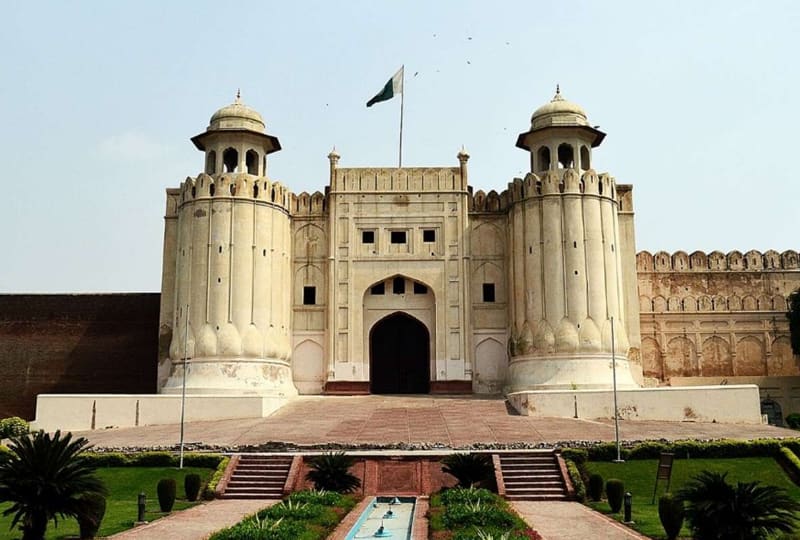
The fort is made up of two main sections: the Diwan-e-Aam area, with its public halls and gardens, and the private royal quarters, with the palaces, bedchambers and courtyards. Visitors enter through the grand Alamgiri Gate, then move through courtyards and pavilions toward the inner palace areas.
Alamgiri Gate: The massive main entrance built by Aurangzeb, facing the Badshahi Mosque.
Diwan-e-Aam and Diwan-e-Khas: The halls of public and private audience, where emperors met their subjects and courtiers.
Sheesh Mahal (Palace of Mirrors): A shimmering hall decorated with thousands of tiny mirrors and inlay work, built under Shah Jahan.
Naulakha Pavilion: A graceful marble pavilion with fine inlay work, known for its curved roof and delicate detail.
Picture Wall: A very long wall decorated with colourful tile mosaics and frescoes showing hunting scenes, polo and royal life, dating to Jahangir's era.
Moti Masjid: A small white marble mosque inside the fort.
Hathi Paer (Elephant Path): A stepped ramp that allowed royal elephants to carry nobles up to the palace.
Sikh-era structures: Including the haveli of Maharaja Ranjit Singh's family, a reminder of the fort's later history.
Early morning gives the quietest walk and softest light, while late afternoon brings warm tones on the red brick and marble.